
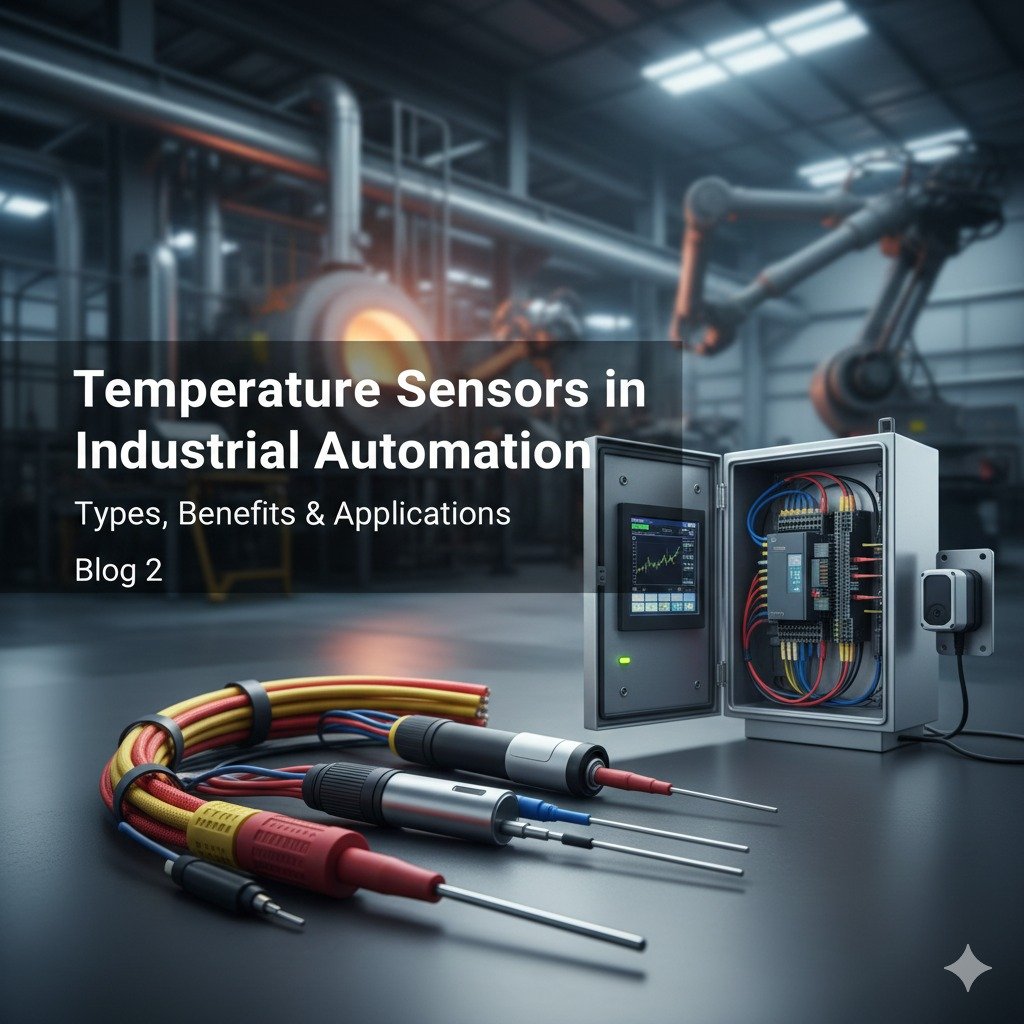
Introduction
Industrial automation depends on accurate real-time data to maintain efficiency and safety. Temperature monitoring is one of the most critical parameters in automated industrial systems, directly influencing product quality and equipment performance.
Why Temperature Monitoring is Important
Temperature variations can impact material properties, production efficiency, and machine lifespan. Reliable temperature sensors help industries maintain process consistency and prevent operational failures.
Types of Temperature Sensors Used in Automation
Thermocouples
Thermocouples are widely used for high-temperature and heavy industrial applications due to their robustness and fast response time.
RTDs (Resistance Temperature Detectors)
RTDs provide higher accuracy and stability, making them suitable for industries requiring precise temperature control.
Infrared Temperature Sensors
Infrared sensors enable non-contact temperature measurement for moving or hazardous surfaces.
Integration with Industrial Automation Systems
Modern temperature sensors integrate with:
- PLC control systems
- SCADA monitoring platforms
- Industrial IoT solutions
- Predictive maintenance systems
This enables real-time monitoring and data-driven decision-making.
Benefits of Advanced Temperature Monitoring
- Improved product consistency
- Reduced energy consumption
- Lower maintenance costs
- Increased equipment lifespan
- Enhanced workplace safety
Conclusion
Temperature sensors play a key role in modern industrial automation by ensuring operational efficiency and process reliability. Investing in high-quality temperature sensing solutions supports long-term industrial growth.